
Stay safe
Keep people and pets out of flooded rooms. If the water is near outlets, appliances or the panel and you can reach the main breaker safely, turn the power off. Otherwise stay out and call.
Professional
24/7 water removal.
Emergency flood cleanup, flood water removal and structural drying for Phoenix homes and businesses. Tell us where the water came from and how long it has been there, and we will help you decide the next step.
Flood cleanup Phoenix, AZ
When a monsoon storm, a burst pipe or a sewage backup floods a Phoenix property, the first hours decide how far the damage spreads.
Our flood cleanup service starts with the source of the water, then moves through flood water removal, moisture checks, structural drying and cleaning. We also help with monsoon storm flooding, burst pipe floods and sewage backup, in flooded homes, garages, apartments and commercial spaces. Call, describe what you see, and we will confirm availability and the next practical step.
Start here
Begin with the evidence, not a guess about the damage type.
What to do after a flood
Six steps for the first hour. Stay safe first, then get help on the way.
Keep people and pets out of flooded rooms. If the water is near outlets, appliances or the panel and you can reach the main breaker safely, turn the power off. Otherwise stay out and call.
Shut off the main water valve for a pipe or appliance failure. You cannot stop monsoon runoff, so focus on keeping people safe.
Take wide and close photos from dry spots, and note when the water appeared. This helps with your insurance claim.
Call (480) 919-7058. Give the address, the source, how deep the water is and any hazards. Ask about availability and the next step.
Ask how your policy treats the water source. Many standard policies treat sudden pipe failure differently from rising floodwater.
Lift belongings off wet floors only if it is safe. Do not enter deep or contaminated water to rescue items.
10 flood & water services
Choose the closest match, or call and describe what you see. We will help identify the right next step.
From standing water to a clear recovery plan.
A plan for the materials water leaves behind.
Remove standing water before it spreads further.
A practical first step for accessible pooled water.
Clean affected surfaces and review what can be kept.
Address moisture you cannot see from the doorway.
Recover after rainwater crosses the property boundary.
Contain an indoor leak and assess the rooms it reached.
Keep people away from contaminated water.
Make the next decision clear when damage is still unfolding.
A guide, not a guess
Flood Cleanup Phoenix focuses on flood and water-related property damage. The aim is to move owners and managers from uncertainty to a practical plan.
For every caller, the first goal is simple: understand what happened, where moisture may remain, and which service is appropriate. Ask about hours, credentials, equipment and scope when you call.
Why Phoenix properties flood
Many Phoenix homes are built on concrete slabs, so water spreads across the floor and into adjoining rooms quickly.
Summer storms (monsoon season runs June 15 to September 30) can push runoff across streets, driveways and door thresholds.
Read the guide →Aging supply lines, water heaters, washers and AC condensate lines can flood a room quietly behind cabinets and under floors.
Read the guide →A storm-damaged roof or a leak above a ceiling can wet insulation and drywall long before a stain appears.
Read the guide →A blocked main line can push wastewater into a bathroom or floor drain. This needs controlled handling and restricted access.
Read the guide →Phoenix flood history
A desert city floods more often than most people expect. Here is what past events and the summer storm season mean for your property today.
The Salt River swelled to more than three miles wide, destroyed a railroad bridge and left Phoenix without a rail link for about three months. The flood helped push the region toward dams, including Roosevelt Dam in 1911, which was built for water storage rather than flood control.
After heavy winter and spring storms filled the reservoirs upstream, water was released into the normally dry Salt River channel for months. Releases peaked near 124,000 cubic feet per second and washed out the approaches to several bridges.
Sky Harbor recorded about 3.30 inches of rain in a single day, the most since records began in 1895. Underpasses flooded and Interstate 10 became impassable at 43rd Avenue.
Phoenix monsoon season
The official monsoon season in Arizona runs from June 15 to September 30. Storms often peak in July and August. Intense, short bursts can fill washes and streets in minutes, even when the sky over your house looks clear.
Sources: Phoenix flood of 1891 ↗ · National Weather Service, Arizona flood safety ↗ · Phoenix rainiest days on record ↗
How we work
Six steps, from first call to final check. No guesswork.
Tell us the address, the water source, how deep it is and any hazards.
We review electrical, access and contamination risks before any work starts.
Standing water is removed so floors, edges and thresholds can be inspected.
Readings show what is still wet beyond the visible area, including walls and subfloor.
Airflow and humidity control dry the structure while surfaces are cleaned and sanitized.
Readings are reviewed and the next step is explained before repairs begin.
Neighborhoods & landmarks
Landmarks help us place your property. Give the cross streets or nearest landmark when you call, and confirm the exact address.
Downtown Phoenix, Encanto, Willo, Coronado, Midtown, Sky Harbor area
Arcadia, Biltmore, Camelback East, Rancho Encanto, Squaw Peak
Sunnyslope, North Mountain, Moon Valley, Deer Valley, Desert Ridge
Maryvale, Alhambra, Estrella, Villa de Paz
South Mountain, Laveen, Ahwatukee Foothills, Baseline corridor
Reference points: Camelback Mountain, South Mountain Park, the Salt River bed, Sky Harbor International Airport, the Arizona Canal, Papago Park and Desert Ridge. Service availability depends on location and is confirmed by phone.
Phoenix & surrounding communities
Find guidance for your area, then call with your property address to confirm service availability and access.
A ZIP code crosses neighborhoods, so give your street address and nearest cross streets when you call.
Visual guide to recovery
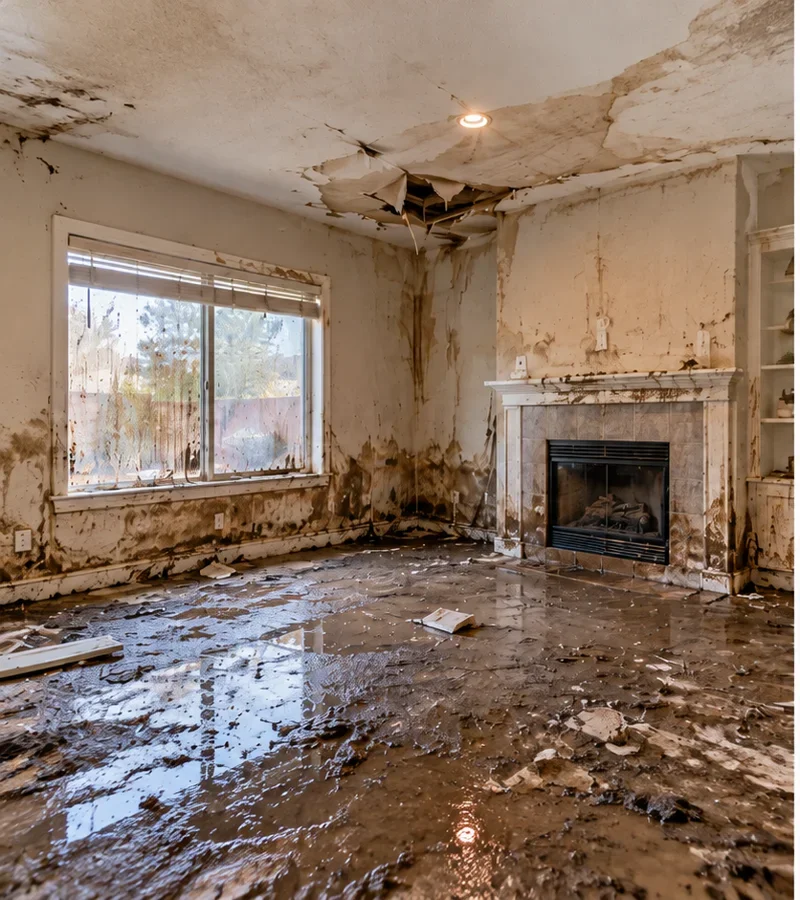
Typical rooms before and after flood and water damage cleanup.
Flood cleanup cost in Phoenix
Typical planning ranges for flood cleanup. Your price depends on the size of the affected area, the water source and what has to be removed.
| Situation | Typical planning range | What moves the number |
|---|---|---|
| Minor flood, one room (clean supply water) | $1,000 – $3,500 | Room size, flooring type, how long the water sat |
| Several rooms or a whole floor | $3,000 – $12,000+ | Affected square footage, drywall, drying days |
| Storm or flood water, per sq ft | $4 – $9 / sq ft | Outside water carries soil and contaminants |
| Sewage or Category 3 water, per sq ft | $7 – $12+ / sq ft | Containment, removal of porous materials, disinfecting |
| Structural drying and monitoring | $500 – $3,500 | Equipment count, days on site, moisture readings |
| Repairs and reconstruction | Priced separately | Drywall, flooring, cabinetry, paint |
These are general industry planning ranges, not a quote or a Flood Cleanup Phoenix price list. A written scope after assessment is the only reliable number. Insurance may cover some water sources and not others; check your policy.
Flood cleanup FAQ
Water removal can often be done in hours to a day, but drying structural materials commonly takes several days. Duration depends on the water amount, materials and moisture readings, not a fixed schedule.
Planning ranges run from about $1,000 for a small clean-water room to well above $10,000 for multi-room or contaminated floods. See the table on this page; a written scope after assessment is the only real quote.
It depends on the water source and your policy. Sudden pipe failures are often treated differently from rising floodwater, which standard homeowner policies commonly exclude. Contact your insurer early and keep photos and invoices.
Small clean-water spills may be manageable. Do not handle storm water, sewage or water near electrical equipment yourself, and do not rely on a household vacuum or fan to dry structural materials.
As soon as it is safe. Moisture spreads into walls and flooring and mold can begin to grow within 1 to 2 days, so calling early limits the damage.
Treat storm water and sewage as potentially contaminated. Avoid contact, keep children and pets away, and wear protective gear only if you must enter.
Our area guides cover Phoenix and 24 surrounding communities. Call with the exact property address to confirm availability and access.
Call (480) 919-7058, or prepare a short request on the contact page to copy or open in your messaging app.


